

Magnesium diboride (MgB₂), a compound known since the 1950s, was unexpectedly discovered to be a superconductor with a transition temperature (Tc) of 39 K in 2001. This discovery sparked tremendous excitement in the superconductivity community and led to a rapid understanding of its fundamental properties, including its conventional BCS superconductivity with two weakly coupled electronic bands and two distinct superconducting energy gaps. The extreme volatility of magnesium strongly constrains the growth of MgB₂ single crystals and thin films. For thin-film synthesis, maintaining a sufficiently high magnesium vapor pressure is essential to ensure the thermodynamic stability of the MgB₂ phase at elevated temperatures. Additional requirements include a clean growth environment and high-purity Mg and B sources. Hybrid physical-chemical vapor deposition (HPCVD) is the most effective growth technique for meeting these conditions, producing epitaxial films with outstanding superconducting properties. The Tc values of pure HPCVD-grown films can even exceed the bulk value through epitaxial strain engineering. In carbon-alloyed HPCVD films, exceptionally high upper critical fields (Hc₂) exceeding 60 T have been achieved. To grow ultrathin MgB2 for electronic applications, the C-terminated surface is found to be more favorable than the Si-terminated surface of the polar SiC substrate. For superconducting radio-frequency (SRF) cavity applications, the low eutectic temperatures of the Mg-Cu and Mg-Zn systems may facilitate lower-temperature growth on copper and brass substrates. Numerous engineering challenges have been overcome to enable the growth of high-quality MgB₂ films on three-dimensional, irregularly shaped objects as well as on large-area substrates. This talk will highlight the interplay of materials science, thin-film growth, and engineering that has transformed MgB₂ from a surprising discovery into a technologically promising superconductor.
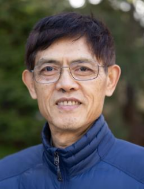
Xiaoxing Xi is Laura H. Carnell Professor of Physics at Temple University. Prior to 2009, he was Professor of Physics and Materials Science and Engineering at The Pennsylvania State University. He received his PhD degree in physics from Peking University and Institute of Physics, Chinese Academy of Sciences, in 1987. After several years of research at Karlsruhe Nuclear Research Center, Germany, Bell Communication Research/Rutgers University, and University of Maryland, he joined the Physics faculty at Penn State in 1995. His research focuses on the materials physics of oxide and boride thin films. His notable contributions include early work on epitaxial thin films, heterostructures, and electric-field effect in high temperature superconductors, pioneering work on lattice dynamics in ferroelectric thin films and nanostructures, invention of hybrid physical-chemical vapor deposition for magnesium diboride, and development of atomic layer-by-layer laser molecular beam epitaxy for oxide thin films and interfaces. He is author of over 360 refereed journal articles and 3 U.S. patents. He is a Fellow of the American Association for the Advancement of Science and a Fellow of American Physical Society. Since 2015, he has spoken out actively for Asian American scientists, for which he received the American Physical Society 2020 Andrei Sakharov Prize and awards from civil rights and civil engagement organizations.