

Deep Learning (DL) algorithms, recognized for their extensive capabilities in efficient image and video processing, have emerged as promising candidates for deployment within low-latency, mission-critical systems at the edge. Continuous research aimed at achieving high-performance DL execution has resulted in the development of several specialized, low-overhead inference hardware accelerators. Nevertheless, these DL accelerators are vulnerable to hardware faults induced by high-energy particles, process variations, temperature fluctuations, and structural deformities, which may manifest as latent defects. Such faults have the potential to result in misclassification, thereby compromising safety during mission mode, which could lead to catastrophic consequences, including the loss of human lives. Additionally, security threats such as bit-flips and adversarial attacks may also undermine the application of these DL accelerators in mission-critical systems. In this presentation, we will delineate the various safety and security challenges associated with DL accelerators and explore several solutions to address these issues, specifically within mission-critical contexts. We will also explore how device or materials-level research can help in improving the reliability of DL accelerators.
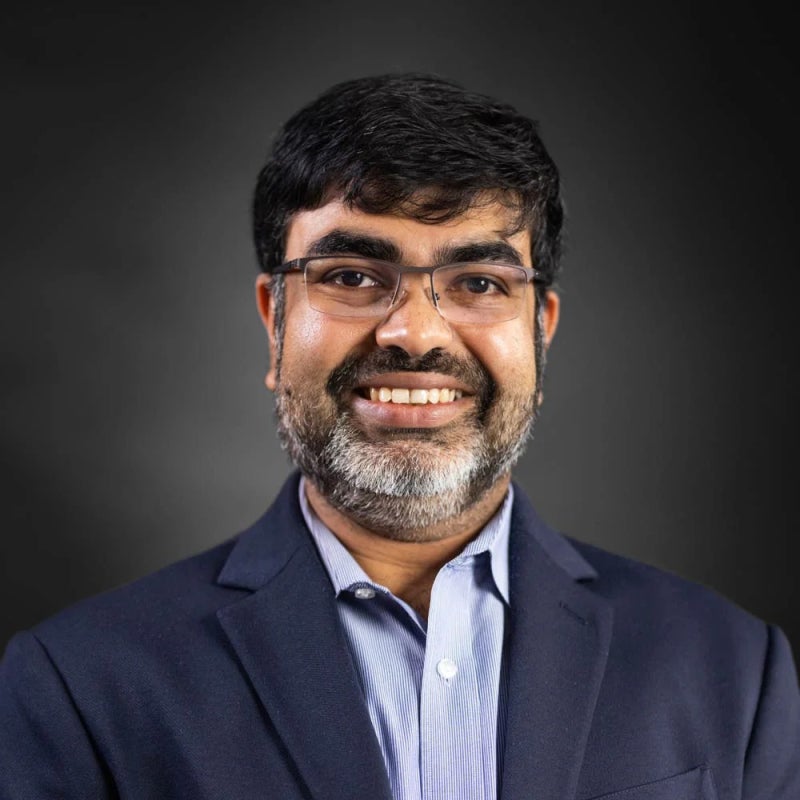
Kanad Basu is an Associate Professor at the ECSE department of RPI, where he directs the Trustworthy and Intelligent Embedded Systems (TIES) laboratory. Prior to this, he was an Assistant Professor in the Department of Electrical and Computer Engineering at the University of Texas at Dallas. He obtained his doctoral degree from the Department of Computer and Information Science and Engineering at the University of Florida. He has held positions at several prestigious semiconductor companies, including Intel, IBM, and Synopsys. Prior to his time at UTD, he was an Assistant Research Professor in the Electrical and Computer Engineering Department at New York University. His research interests encompass the design of reliable and secure hardware for Internet-of-Things (IoT) applications, particularly for AI systems, including neuromorphic hardware. He has authored one book, two U.S. patents, two book chapters, and numerous peer-reviewed journal articles and conference papers. His research has attracted attention from various news outlets, including NBC Austin and CBS Dallas-Fort Worth. Dr. Basu has received several honors, including the NSF CAREER Award and the Jonsson School Outstanding Assistant Professor Award from the University of Texas at Dallas. To date, he has successfully supervised six doctoral candidates, as well as several Master's and undergraduate students. His research has garnered multiple best paper awards and has been featured in the IEEE Top Picks in Test and Reliability. Furthermore, he has mentored student teams, guiding them to success in numerous international hardware hacking competitions, such as HACK@DAC and NYU CSAW.