

The next generation of polymeric materials will need features typically associated with biological systems: programmable material properties and chemical composition, self-healing and self-regenerating capabilities, and compatibility with sustainable and scalable manufacturing practices. While engineering synthetic materials with such capacities is often challenging, these properties are inherent to biological materials, including biofilms, mycelium, and lichen.
In the first part of the seminar, we will focus on TUTTUT (The Uniaxial Tensile Tester for UltraThin films, liquid-supported films), a method for quantifying the complete uniaxial stress-strain relationship of thin and soft films. Here, we directly measure the uniaxial stress-strain response of biofilms, dense microbial communities surrounded by a matrix of extracellular polymeric substances. We quantify how the mechanical response of Bacillus subtilis biofilms is affected by changes in the surrounding environment, including metal ions and osmotic stress. Our results provide new fundamental insights into how the surrounding environment can alter the mechanical behavior of biofilms.
In the second part of the seminar, we will demonstrate how we can tune the mechanical properties of lichens and mycelium through hydration, growth conditions, or genetic engineering. We investigate how the mechanical properties of both natural lichens and engineered mycelium are impacted by hydration. For engineered mycelium, we use Aspergillus niger engineered to express silicatein on the cell surface, thereby enabling biomineralization. We measure the uniaxial stress-strain response of A. niger films and fibers with varying growth and processing conditions. Our results provide new approaches to strengthen engineered living materials.
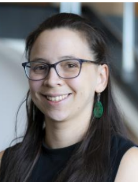
Dr. R. Kōnane Bay is an Assistant Professor in the Department of Chemical and Biological Engineering at University of Colorado Boulder. She received her B.S. in Materials Engineering from Rensselaer Polytechnic Institute and M.S. and Ph.D. in Polymer Science & Engineering from the University of Massachusetts Amherst, where she studied the mechanics of ultrathin polymer films. She completed her postdoctoral training as Princeton Presidential Postdoctoral Research Fellow at Princeton University working on the bacteria growth and motility in complex environments. Her lab, Huli Materials Lab, focuses on fabricating and characterizing traditionally difficult-to-handle materials, including ultrathin polymer films (< 100 nm), biofilms, lichen, and engineered living materials.